Blog
Tuscany Wedding Photography Guide: Light, Venues and Timeless Italian Atmosphere
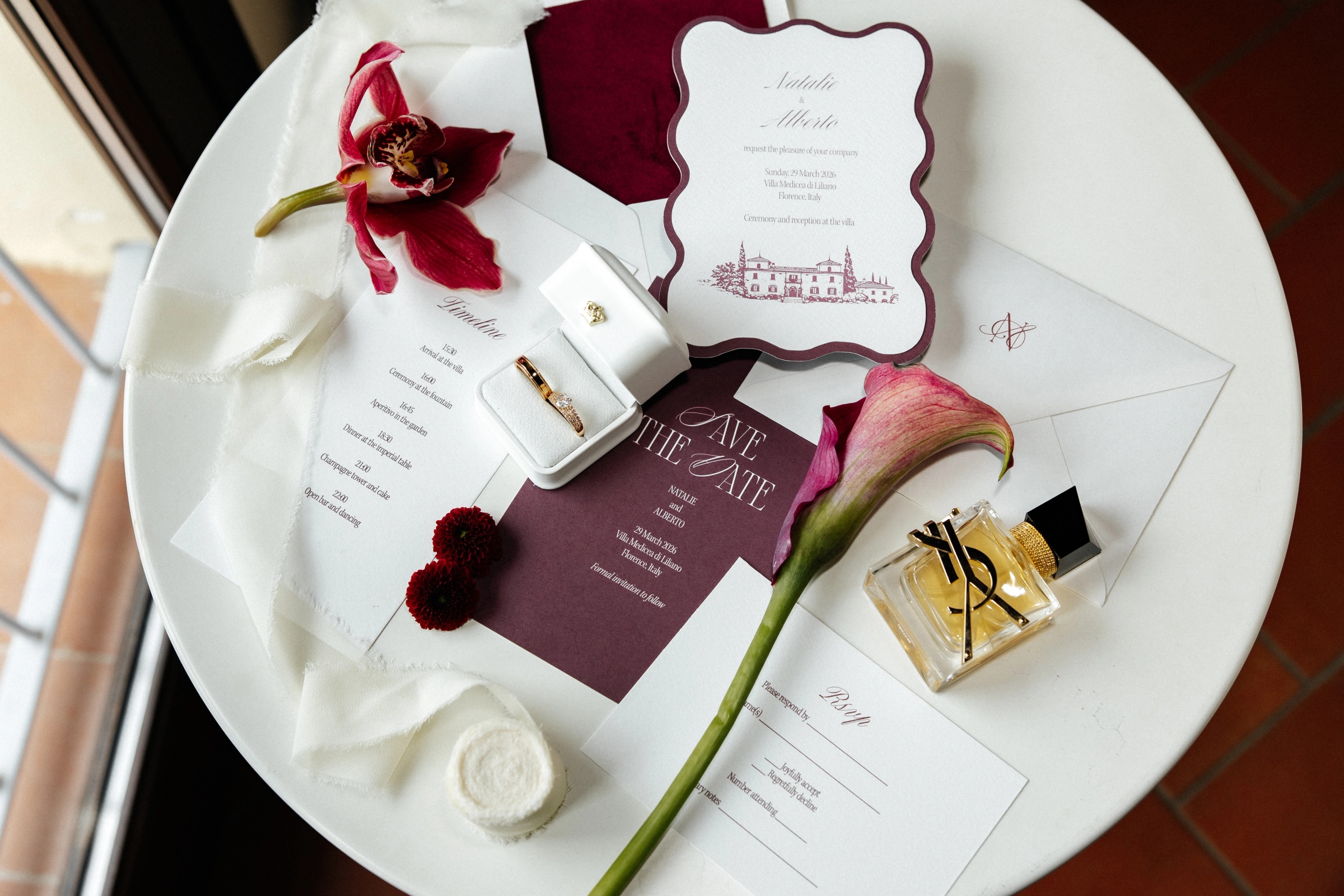
Tuscany stands as an undisputed masterpiece among European destination wedding locations. Defined by its sweeping, sun-drenched rolling hills, ancient stone borgo settlements, perfectly aligned cypress avenues, silver-leafed olive groves, and world-renowned vineyards, this central Italian region offers an atmosphere of profound, unhurried romance. For couples choosing to host their milestone in Italy, Tuscany is far more than a mere geographical coordinate—it is an immersive sensory experience. It is the warmth of the terracotta tiles, the scent of wild rosemary and lavender in the evening air, and the effortless, sophisticated art of la dolce vita.
From a visual storytelling perspective, Tuscany is an absolute dream, providing a highly textured, painterly canvas for premium wedding photography. However, executing a flawless, magazine-quality gallery in this region requires an expert understanding of its unique environmental logistics. The Tuscan sun can be blindingly harsh at midday, private villa estates are often sprawling and multi-leveled, mid-summer temperatures require careful pacing, and the entire rhythm of the celebration is fundamentally designed around open-air living—from sunlit garden ceremonies to extended al fresco dinners under the stars. To ensure your visual legacy captures both the breathtaking scale of the landscape and the intimate, authentic soul of your celebration, your timeline, spatial layout, and lighting strategies must be masterfully orchestrated.
Why Tuscany Is So Special for Wedding Photography
Tuscany translates to the photographic frame with an extraordinary, inherent softness and cinematic depth. The visual language of the region is built upon a distinct, earthy color palette: warm ochres, deep burnt siennas, muted sage greens, and the pale, sun-bleached tones of ancient travertine stone. This natural chromatic harmony acts as an exquisite, unobtrusive backdrop that beautifully elevates modern bridal fashion, fine floral architecture, and luxury event design.
Unlike a fast-paced urban destination wedding—where visual interest is often generated through striking architectural geometry and rapid movement through historic city streets—a Tuscan wedding narrative is anchored in space, light, and an unhurried sense of place. The operational rhythm of the day feels expansive and deeply grounding. A comprehensive visual story flows organically through distinct environmental chapters:
- The quiet, atmospheric morning light filtering through the wooden shutters of a centuries-old master suite.
- A highly emotional ceremony staged on a panoramic terrace overlooking miles of uninterrupted Val d’Orcia valleys.
- A relaxed, golden-hour portrait session strolling through rows of Sangiovese grapevines.
- An elegant, high-energy aperitivo set within a classic Italian garden (giardino all'italiana).
- A prolonged, candlelit dinner experience hosted in a highly textured medieval courtyard.
This unique spatial flow is precisely why Tuscany is the ultimate setting for couples who value a refined yet entirely organic visual aesthetic. The environment does not require heavy, artificial over-styling. The monumental beauty is already present; it simply demands a photographer with an astute editorial eye, exceptional lighting reflexes, and the emotional sensitivity to let the authentic story breathe.
Choosing the Right Tuscan Venue: A Photographic Layout Analysis
The architectural diversity of Tuscan wedding venues is immense, ranging from exclusive private estates to fully restored medieval villages. Selecting the perfect venue dictates not only the guest experience but also the fundamental aesthetic signature and technical quality of your final gallery.
Consider how distinct venue typologies translate through the lens:
- Historic Renaissance Villas (e.g., in the Florentine Hills or Lucca): Perfect for high-fashion, classical luxury. They offer highly structured symmetrical facades, ornate interior frescoes, sweeping double staircases, and pristine manicured hedge mazes that allow for dramatic, editorial compositions.
- Wine Estates & Vineyards (e.g., in Chianti Classico or Montalcino): Deliver a warm, grounded, and deeply romantic atmosphere. The visual focus shifts to expansive horizontal landscapes, rustic stone textures, oak barrel cellars, and glorious, uninterrupted sunset horizons.
- Restored Countryside Borghi & Hamlets: Ideal for multi-day, immersive intimacy. These self-contained village estates offer incredibly charming, narrow cobblestone alleyways, hidden piazzas, and highly textured ivy-covered walls, providing a diverse array of private portrait backdrops within footsteps of your room.
- Luxury Castles (Castelli): Introduce profound historical weight, dramatic scale, and high visual contrast. Massive crenellated towers and deep, shadowed archways allow for bold, moody, and highly striking editorial portraiture.
The Spatial Layout Checklist for Photography
When scouting venues, you must evaluate the property through a logistical and lighting lens, looking far beyond the primary ceremony view:
- Getting-Ready Suites: Do the bridal and groom suites feature large windows that allow for clean, directional ambient light, or are they dark, deeply recessed rooms with small medieval windows? High ceilings and neutral, light-colored walls are essential for clean, bright morning portraits free of unflattering color casts.
- Midday Shade Availability: Because summer ceremonies or first looks often occur when the sun is high, ensure the venue features accessible open shade—such as a dense loggia, an ancient oak canopy, or a covered portico—where formal portraits can be executed with soft, flattering light.
- Proximity of Event Spaces: A sprawling estate is magnificent, but if the getting-ready villa is a 15-minute walk up a steep gravel hill from the ceremony lawn, and the dinner reception is in a separate olive grove, transitions will consume vital timeline buffers. Proximity preserves your energy and maximizes actual shooting time.
The Importance of Light in Tuscany: Mastering the Sun's Trajectory
Light is the definitive signature of Tuscan photography. The region is legendary for its luminous, golden-hour falloff, where the low sun filters through atmospheric summer haze, wrapping the rolling hills in a warm, gilded glow. However, achieving those iconic, glowing portraits requires strict adherence to natural light geometry.
Throughout the late morning and early afternoon (typically from 11:00 AM to 4:00 PM during peak summer months), the Tuscan sun is directly overhead, intensely bright, and highly unforgiving. This harsh direct sunlight creates deep, unflattering shadows under the eyes, causes subjects to squint, and results in extreme contrast that can blow out the intricate details of a white wedding dress.
Strategic Light Management
To counter these extreme conditions, a master destination photographer implements a highly calculated approach to the day's flow:
- Midday Pacing: Utilizing the harsh midday hours exclusively for indoor getting-ready coverage, flat-lay detail styling, and candid, documentary-style guest arrivals in shaded courtyards.
- Ceremony Orientation: If hosting an open-air ceremony, the directional angle of the sun is critical. Work with your planner to orient the altar so the sun is either evenly lighting the couple's faces or providing clean, direct backlighting. You must avoid side-lighting, where one partner is blasted by bright sun while the other is cast into deep, unrecoverable shadow.
- The Golden Hour Priority: The creative couple's portrait session must be fiercely protected and scheduled for the final 45 to 60 minutes before sunset. At this exact window, the harshness dissipates entirely. Your photographer can shoot directly into the sun to create dreamy, romantic lens flare, or utilize the soft, directional light to carve out breathtaking, sculptural profiles against the iconic landscape.
Season and Weather Considerations: Curating the Visual Mood
Tuscany’s wedding season spans from late April through October, with each period imparting a distinctly different sensory and visual mood to your gallery. Historical climate data and elite event planning resources consistently highlight late spring (May to early June) and early autumn (September) as the absolute pinnacle windows for outdoor celebrations, offering an optimal balance of reliable sunshine and comfortable ambient temperatures.
Seasonal Aesthetic Profiles
- Spring (May – June): The landscape is incredibly lush, vibrant, and alive. The rolling hills are blanketed in brilliant, saturated greens, punctuated by vibrant red fields of wild poppies. The light feels crisp, clean, and romantic, perfect for fresh, airy fine-art photography.
- High Summer (July – August): Defined by intense heat, long sunlit days, and a classic, sun-baked aesthetic. The green fields transition to a rich, golden-wheat hue. Evenings are gloriously warm, allowing for true, unbothered late-night outdoor dining. Photography during these months leans into rich, warm tones and high-contrast, sun-drenched lifestyle imagery.
- Autumn (September – October): The ultimate atmosphere for visual depth. The vineyards turn deep shades of crimson, gold, and burnt orange during the active vendemmia (grape harvest). The sun sits lower in the sky throughout the day, providing an extended, ultra-soft golden hour and a deeply romantic, nostalgic, and sophisticated gallery tone.
The Art of the Contingency Plan
While Tuscany boasts an enviable Mediterranean climate, sudden summer thunderstorms (temporali) or unseasonal autumn winds are a reality. A premium destination photographer views a wet-weather contingency plan not as a compromise, but as a unique creative opportunity. Ensure your venue offers an interior backup space—such as a vaulted barrel cellar, a frescoed grand hall, or a fully transparent, structured glass marquee—that aligns with your high-end design standards. Dramatic rain clouds rolling over the Val d’Orcia offer incredibly cinematic, moody backdrops that result in unforgettable, high-fashion editorial frames.
Outdoor Ceremonies and Long Dinners: Atmospheric Evening Capturing
The quintessential Tuscan wedding experience culminates in the evening dinner service. Long, imperial wooden tables stretching beneath a canopy of dense olive branches, illuminated by hundreds of flickering taper candles and overhead canopy string lights (cielo stellato), create an atmosphere of pure, unmatched magic.
Documenting this extended chapter requires a highly specialized technical skill set. As the vibrant sunset fades into deep twilight (the "blue hour") and eventually pure darkness, the camera relies entirely on the quality of your introduced event lighting.
Technical Evening Guidelines for Flawless Photography
- Ambient Light Layering: Relying exclusively on candlelight is highly romantic but often insufficient for clean, sharp photography, resulting in grainy, underexposed files. Incorporate dense, warm-toned overhead string lights or subtle, professional pin-spotting to wash the tablescape in soft, even ambient light.
- Color Temperature Consistency: Ensure your lighting production team utilizes bulbs with a warm color temperature (ideally between 2400K and 2700K). Mixing cool, stark-white LED lights with warm candlelight creates an unflattering, clinical visual clash that is incredibly difficult to correct in post-production.
- Preserving the Atmosphere: A master photographer captures speeches and dinner interactions using fast prime lenses (f/1.2 or f/1.4) and highly sophisticated, modified off-camera flash setups. The flash is subtly bounced off distant stone walls or diffused heavily to fill in shadows without overpowering the beautiful, warm ambient glow of your candles and string lights, preserving the authentic, intimate feeling of the al fresco feast.
Creating a Realistic Timeline: The Mechanics of Tuscan Pacing
Because Tuscan estates operate on a grand scale, micro-delays can easily compound, threatening the relaxed, effortless atmosphere you traveled to Italy to achieve. Designing a realistic, unhurried timeline is the single most effective investment you can make in the quality of your photography.
Transitions across a sprawling estate require dedicated buffer zones. Moving 100 guests from the ceremony lawn to the aperitivo pool terrace, and later guiding them to the dinner courtyard, takes genuine time. If these transitions are rushed, the day feels frantic, and your expressions will naturally reflect that underlying stress.
A Master Sample Timeline for a Summer Tuscan Wedding (Sunset at 8:45 PM)
- 1:30 PM – 4:00 PM (Getting Ready & Details): Capturing flat-lays, venue establishing shots, and candid moments in the cool interior suites.
- 4:00 PM – 4:45 PM (The First Look & Shaded Portraits): Executed in the soft light of a covered loggia or tree-lined avenue before guests arrive.
- 5:30 PM – 6:15 PM (The Ceremony): Scheduled when the sun has dropped sufficiently to avoid harsh overhead shadows.
- 6:15 PM – 7:30 PM (Aperitivo & Candid Storytelling): The couple joins their guests for authentic mingling, Aperol Spritz toasts, and dynamic documentary capturing.
- 7:30 PM – 8:15 PM (Golden Hour Creative Session): Slipping away for 45 minutes of dedicated, high-fashion editorial portraits in the glowing countryside.
- 8:30 PM (Dinner Reception & Twilight Speeches): Guests are seated just as the deep blue twilight sets in, transitioning perfectly into candlelit al fresco dining.
Allocating generous space between formal events allows for the magic of the unscripted "in-between" moments—the spontaneous laughter with your bridal party in the garden, a quiet stroll with your partner under an ancient archway, or simply sitting back with a glass of Brunello to absorb the breathtaking live music echoing off the villa walls.
Editorial and Documentary Approach in Tuscany: The Perfect Hybrid
Tuscany is the ultimate stage for a sophisticated synthesis of Editorial and Documentary wedding photography. Relying exclusively on one style leaves the story incomplete; the region demands an artist who masters both disciplines.
The Editorial philosophy honors the extraordinary environment and your meticulous design investments. It applies high-fashion visual direction to capture the sweeping, symmetrical lines of a Renaissance garden, the perfect drape of your veil against a rustic stone doorway, and immaculate macro-details of your olive-branch-infused tablescapes. It ensures your portraits look polished, intentional, and worthy of a fine-art publication.
Concurrently, the Documentary philosophy preserves the raw, human heartbeat of the day. An unobtrusive reportage approach captures the wild, uninhibited joy of a traditional Italian millefoglie wedding cake preparation, the tearful embraces during parent dances under the stars, and the chaotic, electric energy of a late-night outdoor dance floor.
This curated balance yields a collection that feels exceptionally refined yet deeply authentic. The imagery is beautifully composed without feeling stiff, and highly emotional without feeling accidental—a definitive, artfully crafted documentation of your Italian milestone.
What to Prepare Before the Wedding: Multi-Day Visual Storytelling
Modern Tuscan destination weddings are rarely confined to a single day; they are curated as comprehensive, multi-day hospitality experiences designed to honor guests who have traveled internationally. To capture the full magnitude of this shared journey, extending your visual coverage across the entire weekend is highly recommended.
Capturing the Extended Narrative
- The Welcome Festa (Pizza & Gelato Party): Hosted on a casual pre-wedding evening, often featuring vibrant, rustic decor, live folk music, and fresh wood-fired pizza. This event allows your photographer to capture warm, high-energy candid interactions as families meet and merge in a relaxed setting.
- The Rehearsal Dinner: Set within a historic wine cellar or a local trattoria, offering intimate, moody, and highly elegant documentary capturing of heartfelt pre-wedding toasts.
- The Farewell Brunch (La Dolce Vita Poolside): A sun-drenched, relaxed conclusion to the weekend, perfect for capturing effortless, editorial lifestyle imagery as guests lounge by the villa pool with espresso and fresh pastries.
Pre-wedding consultations with your destination photographer are vital. Reviewing satellite maps of your venue, confirming specific sunset trajectories, finalizing family portrait workflows, and aligning on evening lighting setups months in advance guarantees that when your wedding weekend arrives, every technical detail is secured.
Final Thoughts
Tuscany is undeniably one of the most visually majestic and timeless regions in the world for destination wedding photography. Its intoxicating blend of golden light, profound historical architecture, sweeping natural topography, and the overarching spirit of Italian warmth creates an unparalleled stage for your celebration.
However, the most extraordinary Tuscan wedding portfolios transcend mere landscape photography. They are a masterclass in capturing the exact sensory and emotional resonance of the day: the way the crisp linen felt against the skin, the radiant warmth of the evening light, the uninhibited laughter echoing across the dinner tables, and the quiet, profound certainty of your commitment. With meticulous timeline planning, strategic spatial awareness, and the right visual artist, your Tuscan gallery will stand as an enduring, breathtaking legacy.
As a premium destination wedding photographer based in Vienna, I operate seamlessly across Europe’s most exclusive regions—including the rolling hills of Tuscany, the iconic shores of Lake Como and the Amalfi Coast, and the grand estates of Austria and Switzerland. My signature methodology marries hyper-perceptive, unobtrusive documentary capturing with sophisticated, magazine-quality editorial direction. My ultimate objective is to provide a calm, authoritative, and deeply reassuring presence throughout your multi-day celebration—preserving not simply the magnificent beauty of your Italian destination, but exactly how it truly felt to live it.